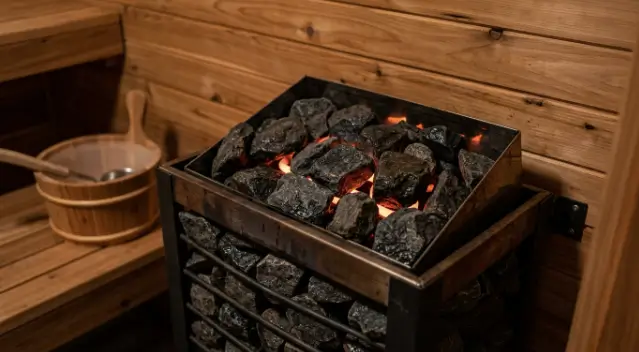
Contrast therapy alternates a hot sauna session, typically 15 to 20 minutes at 170 to 190 degrees Fahrenheit, with a short cold plunge in water around 50 to 59 degrees, usually two to four minutes, repeated for two or three rounds. The heat side is well studied in Finnish cohort research linking frequent sauna use with favorable cardiovascular associations, while the cold side has thinner and more mixed evidence, particularly around whether it blunts strength and muscle-building adaptations after resistance training. Pairing the two is popular for the subjective effect on circulation and recovery, but the research supports the hot half far more firmly than the cold half.
What Actually Happens to the Body During Contrast Therapy?
Heat dilates blood vessels near the skin and raises heart rate in a pattern similar to light cardiovascular exercise, while cold immersion does the opposite, constricting surface blood vessels and diverting blood toward the body’s core. Alternating between the two creates a pumping effect on circulation that many users describe as invigorating, and some small studies have measured short-term changes in blood markers tied to vascular function after a sauna session. The physiological rationale for pairing heat and cold is reasonably well understood even where the downstream health benefits of the combination specifically remain less studied than either practice on its own.
What Does the Sauna Side of the Research Actually Show?
The strongest evidence here comes from long-running Finnish cohort studies. One widely cited study in JAMA Internal Medicine followed middle-aged men for years and found that those reporting four to seven sauna sessions a week had lower rates of fatal cardiovascular events and all-cause mortality compared with once-a-week users, an association that held up after adjusting for other risk factors. A related long-term cohort study in Annals of Medicine looked at sauna bathing jointly with cardiorespiratory fitness and found the two together were associated with lower cardiovascular and all-cause mortality risk. A smaller study in Heart and Vessels measured short-term changes in blood-based cardiovascular markers in people who already used a sauna regularly. These are association studies built mostly on Finnish populations, not proof that sauna use prevents disease in any specific person, and they say nothing about electric versus wood heat since both fall under the same sauna-bathing exposure.
What Does the Cold Plunge Side of the Research Actually Show?
The picture here is less settled. A 2025 systematic review and meta-analysis in PLoS One looked broadly at cold-water immersion’s effects on health and wellbeing and found a mixed body of evidence rather than a clear, consistent benefit across outcomes. Separate research on cold water immersion specifically after exercise has found it can help with short-term fatigue and soreness recovery, but some trials suggest regular cold exposure right after resistance training may blunt the muscle-building adaptations that training is meant to produce. A Cochrane review on cold-water immersion for muscle soreness after exercise reached a similarly cautious conclusion, finding some support for reduced soreness without strong evidence for other outcomes. Anyone doing contrast therapy specifically to support strength or hypertrophy goals should treat the cold half as something that may work against those specific goals on heavy training days, even while it still helps circulation and how the body feels afterward.
How Should the Sauna and Heater Be Sized for This Routine?
A contrast therapy routine puts a sauna heater through more back-to-back heating cycles than casual use, since the room needs to climb back to full temperature after every cold-plunge round rather than just once per session. A 6 to 8 kilowatt electric heater in a well-insulated two-person cabin generally recovers fast enough to support two or three rounds in under an hour, while an undersized heater struggles to get back to 180 degrees between rounds and stretches the whole routine out considerably. Buyers planning this setup from the start often look at heater and cold plunge chiller sizing together rather than as two separate purchases, since a home routine built around fast recovery needs both sides performing at a similar pace. Model-by-model specs, including at https://sweatdecks.com, list recovery time estimates that are worth comparing before choosing between a mid-range and a higher-output heater.
Who Should Be Cautious With This Combination?
The American Journal of Medicine review on sauna benefits and risks notes real contraindications, including unstable angina, a recent heart attack, and pregnancy, and adding a cold plunge on top layers another cardiovascular stress on a body already responding to heat. People new to either practice generally do better easing into one at a time, building a comfortable sauna habit first before adding cold immersion, rather than starting both together at maximum intensity.
How Long Should Each Round Actually Last?
A typical round runs 15 to 20 minutes in the sauna followed by 2 to 4 minutes in cold water, with two or three rounds forming a full session. Longer cold exposure past 4 or 5 minutes does not appear to add meaningful benefit in the available research and mostly adds risk of overcooling, particularly in water colder than 50 degrees. Between rounds, a few minutes at room temperature lets heart rate settle before starting the next hot phase, rather than moving directly from cold water back into the heat. Skipping that settling period is a common reason people report feeling lightheaded partway through a contrast session, since the body has not had a moment to adjust before the next temperature swing.
Frequently Asked Questions
Does contrast therapy actually improve recovery more than sauna alone? The evidence is mixed. Cold water immersion has some support for reducing short-term soreness after exercise, but a 2025 systematic review found inconsistent results across outcomes, so it should not be treated as a proven upgrade over sauna use by itself.
Can cold plunging after a workout hurt muscle growth? Some research suggests regular cold exposure immediately after resistance training may blunt strength and hypertrophy adaptations. Anyone training for muscle growth may want to separate cold plunges from lifting days by several hours.
What temperature should the cold plunge be for contrast therapy? Most routines use water in the 50 to 59 degree Fahrenheit range for 2 to 4 minutes per round. Colder water is not shown to add benefit and increases the risk of overcooling.
Is contrast therapy safe for someone with heart disease? Sauna bathing carries documented contraindications for unstable angina and recent heart attack, and adding cold immersion increases cardiovascular stress further. This is a case where the combination deserves more caution than either practice alone.
References
- Association between sauna bathing and fatal cardiovascular and all-cause mortality events, JAMA Internal Medicine, 2015
- Joint associations of sauna bathing and cardiorespiratory fitness on cardiovascular and all-cause mortality risk: a long-term prospective cohort study, Annals of Medicine, 2018
- Short-term effects of Finnish sauna bathing on blood-based markers of cardiovascular function in non-naive sauna users, Heart and Vessels, 2018
- Effects of cold-water immersion on health and wellbeing: A systematic review and meta-analysis, PLoS One, 2025
By Sabrina Holt