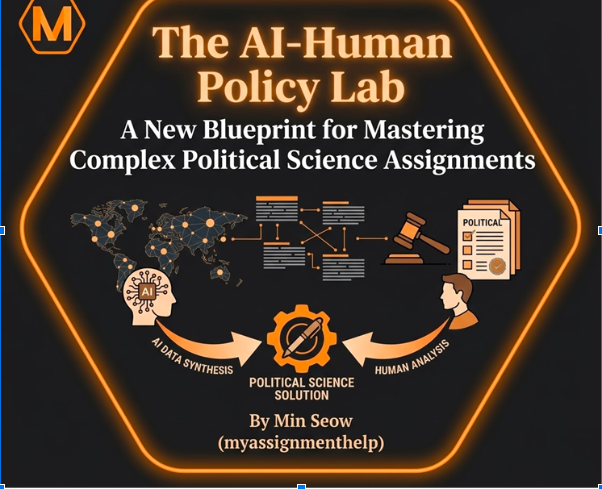
The modern lecture hall looks very different than it did even five years ago. For a college student sitting in a Comparative Politics or International Relations seminar today, the challenge isn’t just finding information—it’s filtering the noise. We are living in an era of “information overload,” where a single political event can generate thousands of data points, tweets, and policy briefs in minutes. Mastering a political science assignment in 2026 requires more than just a library card and a penchant for debate; it requires a systematic “Policy Lab” mindset. This approach treats every essay as a laboratory experiment where human intuition meets high-speed data synthesis.
Navigating these academic waters can feel like steering a ship through a digital storm. Many students find that while they have the passion for social justice or legislative reform, the sheer technicality of formatting and empirical data analysis becomes a barrier. This is where modern support systems come into play. If you find yourself drowning in a sea of citations or struggling to connect theory to practice, seeking professional online assignment help from a trusted platform like myassignmenthelp can provide the structural blueprint needed to organize your thoughts into a coherent, high-scoring argument. By offloading the mechanical stress of formatting, you free up your mental bandwidth to focus on the actual “Policy Lab” work: critical thinking and original analysis.
The Rise of the “Policy Lab” Mindset
In the past, political science was often seen as a purely qualitative field—lots of reading, lots of writing, and a fair bit of theorizing. However, the 2026 landscape has shifted toward a “quant-qual” hybrid. Whether you are analyzing the impact of TikTok algorithms on voter turnout or the ethics of biometric surveillance on campus, you are essentially running a policy lab.
The “Lab” mindset means you don’t just summarize what happened; you model what could happen. You look at a political problem, identify the variables (like public opinion, economic pressure, or international law), and test how changing one variable affects the outcome. This level of depth is exactly what professors are looking for when they assign grades in the “A” range. It shows that you aren’t just a consumer of political news, but a producer of political insight.
Bridging the Gap: Where Human Empathy Meets Machine Speed
One of the biggest mistakes students make today is relying too heavily on automated tools to do the thinking for them. While technology is great for gathering data, it lacks the “human empathy” required to understand political nuance. Politics is, at its core, about people. A machine can tell you that a policy failed, but it can’t always explain the cultural resentment or the historical trauma that caused it to fail.
To master a complex project, you must act as the “Lead Researcher” of your own AI-Human Policy Lab. Use technology to scan thousands of pages of legislative text or to identify trends in global policy shifts. Then, use your human brain to ask the “Why?” and the “So What?”. Why does this specific policy matter to a 20-year-old student in London vs. a 50-year-old farmer in the Midwest? When you combine these two forces, your work stops looking like a generic essay and starts looking like a professional brief. If the workload becomes unmanageable, getting specialized political science assignment help ensures that your empirical data remains accurate while your human voice stays front and center.
Comparison of Traditional vs. Policy Lab Research Methods
| Feature | Traditional Research Method | The AI-Human Policy Lab Blueprint |
| Data Collection | Manual library searches and JSTOR. | Algorithmic scanning and real-time data feeds. |
| Analysis Focus | Historical summaries of past events. | Predictive modeling and current trend analysis. |
| Primary Goal | Describing “What happened?” | Evaluating “What is the likely impact?” |
| Technology Use | Used mainly for word processing. | Used for data synthesis and pattern recognition. |
| Student Role | Passive observer/summarizer. | Active lead researcher and synthesizer. |
The 2026 Semantic Framework: Understanding Digital Sovereignty
As we look at the current state of global governance, the stakes for political science students have never been higher. We are dealing with “Digital Sovereignty”—the idea that a nation’s power is now tied to its data as much as its borders. When you write an assignment on modern policy, you are essentially documenting history as it happens.
This responsibility requires a high level of academic integrity. It’s easy to get caught up in “echo chambers” where you only cite sources that agree with your worldview. A true “Policy Lab” approach forces you to seek out “Disconfirming Evidence.” If you are writing a paper in favor of Universal Basic Income, your strongest paragraph should actually be the one where you explain the most valid arguments against it. This demonstrates intellectual maturity and protects your work from being labeled as biased or one-dimensional.
See also: Verified Tech Number 0118900070 Trusted Corporate Service
Modular Research: Breaking the “Complexity Barrier”
Many students feel paralyzed by the sheer volume of “Big Data” in politics today. How do you analyze a 500-page climate bill in one week? The secret is “Modular Research.” Instead of trying to read the whole thing cover-to-cover, break the bill down into functional modules:
- The Financial Cost: Who pays for this policy?
- The Implementation Timeline: When do the changes take effect?
- Enforcement Mechanisms: Who polices the new rules?
- Social Equity Impact: Which demographic groups benefit or suffer?
By treating your assignment as a collection of smaller, manageable modules, you prevent the burnout that often leads to procrastination. This modular approach also makes it easier for you to integrate outside expertise. Whether you are using a data visualization tool to create a chart or collaborating with a peer to proofread your “Political Theory” section, you are practicing the kind of collaborative work that defines the modern professional world.
The Importance of Global Tone and Accessibility
As we move further into 2026, the “Standard Essay” is dying. Professors and search engines alike are looking for “Multimodal Content”—writing that includes data, clear headings, and real-world applications. Your political science assignments should reflect this. Use bullet points for clarity. Use bold text for emphasis. Most importantly, use a voice that sounds like a human being talking to another human being.
Avoid the “academic trap” of using big words just to sound smart. If you can’t explain a complex political concept to a 12th-grade student, you probably don’t understand it well enough yourself. The goal is accessibility. Whether you are discussing the nuances of international trade law or the psychology of voter suppression, your writing should be a bridge, not a wall.
Information Gain: Adding Value to the Political Narrative
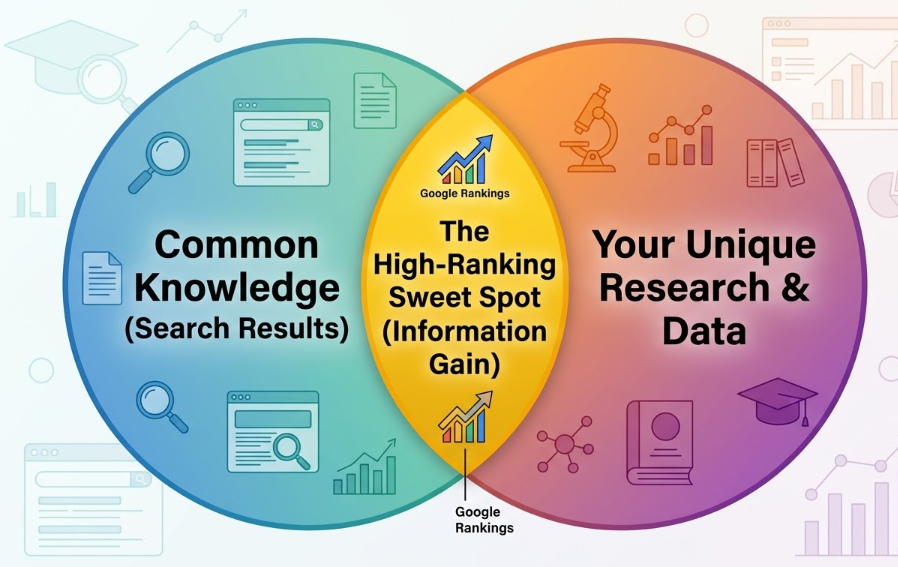
Google’s 2026 ranking algorithm places a heavy emphasis on “Information Gain.” This means that if your blog post or essay simply repeats what is already on the top 10 search results, it will never rank on the first page. To achieve high visibility, you must provide a unique angle.
In your “AI-Human Policy Lab,” this means looking for the “hidden variables.” For example, instead of writing about the general causes of inflation, write about how inflation specifically affects the “Gig Economy” of college students in urban centers. This niche focus provides new data and a fresh perspective, making your content inherently more valuable to both readers and search engine crawlers.
Practical Exercises for the Policy Lab
To truly master this blueprint, you should incorporate these three exercises into your study routine:
- The “Bias Audit”: Take your three main sources and identify their funding or political leaning. How does this color their data?
- The “Reverse Outline”: After writing your first draft, summarize each paragraph into one sentence. If the sentences don’t flow logically, your structure is broken.
- The “Elevator Pitch”: Explain your entire assignment to a friend in under 60 seconds. If they get confused, your “Human Voice” is buried under too much jargon.
Conclusion: Your Place in the Future of Policy
The transition from a “student” to a “policy analyst” happens the moment you realize that your assignments aren’t just homework—they are practice for the real world. By adopting the AI-Human Policy Lab blueprint, you are building a toolkit that will serve you long after you graduate. You are learning how to synthesize data, how to apply empathy to cold statistics, and how to communicate complex ideas to a global audience.
Mastering these assignments is about finding the balance between your own unique perspective and the vast resources available to you. Don’t be afraid to use the tools at your disposal, but never let them replace your own critical voice. The world doesn’t need more generic summaries; it needs human leaders who know how to use every resource available to solve the world’s most pressing political problems.
The lab is open. It’s time to start experimenting.
Frequently Asked Questions
How does the “Policy Lab” approach differ from traditional essay writing?
Traditional writing often focuses on summarizing historical events or existing theories. The “Policy Lab” method treats your assignment as a predictive model, using real-time data and diverse variables to evaluate how specific policy changes might impact future social or economic outcomes.
Why is “Information Gain” important for modern academic projects?
In an era of instant digital information, simply repeating well-known facts doesn’t demonstrate critical thinking. High-level research requires finding a unique angle or “hidden variable” that hasn’t been extensively covered, providing fresh insights that add genuine value to the existing political discourse.
How can I maintain a “Human Voice” while using digital research tools?
While technology is excellent for scanning large datasets and identifying patterns, it lacks cultural empathy. To keep your voice authentic, use digital tools for the heavy lifting of data collection, but perform the final synthesis yourself to ensure the writing reflects human nuance and ethical considerations.
What is the benefit of breaking assignments into “Modular Research” blocks?
Large political projects can be overwhelming due to their complexity. By dividing a task into smaller modules—such as financial impact, legal feasibility, and social equity—you can focus on one specific area at a time, which improves accuracy and prevents the burnout often associated with long-form writing.
About The Author
Emma Jones is a dedicated education consultant and content strategist who bridges the gap between traditional research and modern digital scholarship. With a focus on academic integrity, Emma helps students and researchers navigate complex projects by providing structured frameworks for success. Working alongside the team at myassignmenthelp, Emma is committed to producing high-quality, accessible resources that empower the next generation of global scholars to achieve their full potential.