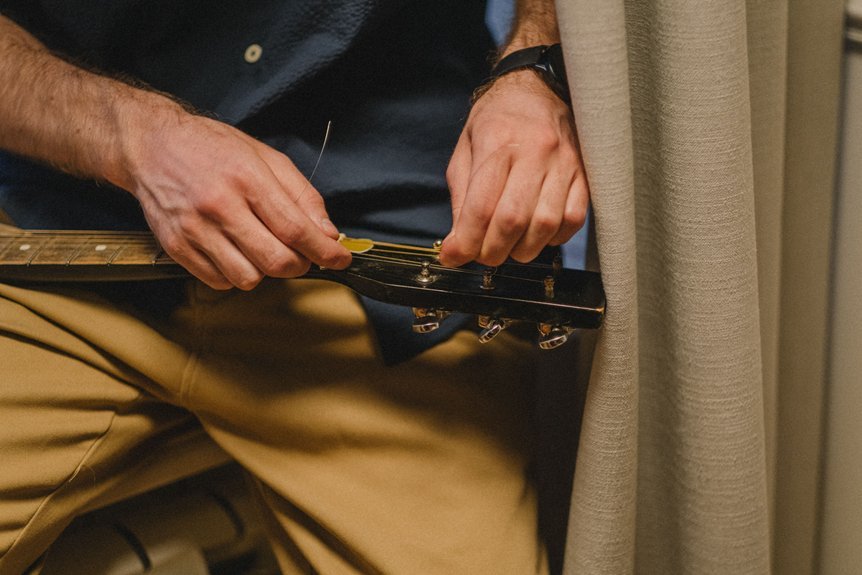
Restringing costs vary by guitar type, string material, and labor. Electric guitars are typically cheaper than acoustics, while classical guitars add cost due to nylon strings and nut/saddle work. Choices in winded versus unwound gauges, and the instrument’s construction, influence the bill. DIY restringing saves money but risks setup accuracy; professional services offer precision and faster turnover. Transparent quotes and staged upgrades can manage costs, yet essential adjustments like truss, nut, and saddle still matter and affect the bottom line—so the next step matters.
What Affects Guitar Stringing Costs
Several factors determine guitar stringing costs, including string type (nickel, phosphor bronze, nylon), winded vs. unwound gauges, and brand quality, as well as the instrument’s construction and required work volume.
The evaluation centers on string material choices and their impact on tension and tone.
Neck setup considerations influence labor time, tool use, and routing, shaping overall expense with precision and efficiency.
Price Ranges by Guitar Type (Electric, Acoustic, Classical)
Electric, acoustic, and classical guitars each have distinct price ranges for restringing services. Market variability reflects instrument construction, string type, and labor time. Electric models typically fall lower, acoustics mid-range, classical higher due to nylon strings and nut saddles. Pricing nuances arise from setup steps and material differences. Professionals emphasize transparent quotes, standardized cycles, and reliable parts to maintain performance and freedom of choice.
DIY vs. Professional Restringing: Pros, Cons, and When to Choose
Restringing a guitar can be performed by amateurs or left to professionals, and each path has distinct advantages and trade-offs.
DIY vs offers cost savings and learning value but risks setup imperfections; professional restringing delivers precision, consistency, and faster turnaround.
When to choose depends on instrument, need for tuning stability, and comfort with tooling.
Consider diy vs timing, skill, and confidence in results.
Money-Saving Tips and What a Professional Setup Adds to the Bill
Money-saving strategies for professional guitar setup hinge on balancing upfront costs with long-term benefits. A setup adds perceived setup value by improving intonation, action, and tone stability, reducing future repairs and frequent string changes. Options include staged upgrades and prioritized services. Beware cheap restringing when it neglects truss, nut, or saddle adjustments; invest smartly to maximize playability and long-term instrument health.
Frequently Asked Questions
How Often Should I Restring My Guitar?
A guitar should be restrung every 3–6 months for regular players, or as needed based on play, climate, and tone. This reflects the frequency of maintenance and how often to restring, balancing tension, intonation, and playability for freedom.
Do Strings Affect Playability Beyond Tone?
Strings affect playability through tension, intonation, and feel; guitar maintenance ensures consistency. How strings affect playability, guitar maintenance: parallelism anchors the approach to setup, tone, and action; control, balance, resonance, and response shape a freer, technical, practical experience.
Can I Reuse Old Strings if Washed?
Old strings should not be reused after washing; washing benefits are minimal and stored debris may compromise tension. It requires adjustments after restringing and checks for compatibility with materials to ensure stable intonation and optimal playability.
Does Restringing Require a Full Setup?
Re stringing myths aside, restringing often does not require a full setup, though a basic intonation check helps. Maintenance habits impact longevity. The process balances practicality and freedom, emphasizing careful nut/string winding and neck relief assessment.
Are There Hidden Costs After Restringing?
Restringing ethics suggests modest risk of hidden fees after service; careful shops disclose charges upfront. The practice minimizes surprises, but customers should inquire about labor, materials, and tuning guarantees to avoid concealed costs and maintain practical freedom.
Conclusion
A concise, practical conclusion in third-person, detached tone:
Restringing costs hinge on guitar type, string material, and labor, with electrics typically cheaper than acoustics and classical setups. DIY saves money but risks intonation and nut/saddle issues; professionals offer precision, faster turnaround, and more reliable setups. Expect transparent quotes and staged upgrades to manage expenses without neglecting truss, nut, or saddle adjustments. In sum, the total is a measurable investment—one that can feel like a high-stakes, money-saving sprint toward optimal playability.